
Sign up to any free trial without exposing your real card. Issue a card pre-loaded with $1, complete the trial, delete the card before the renewal — no recurring charge possible.
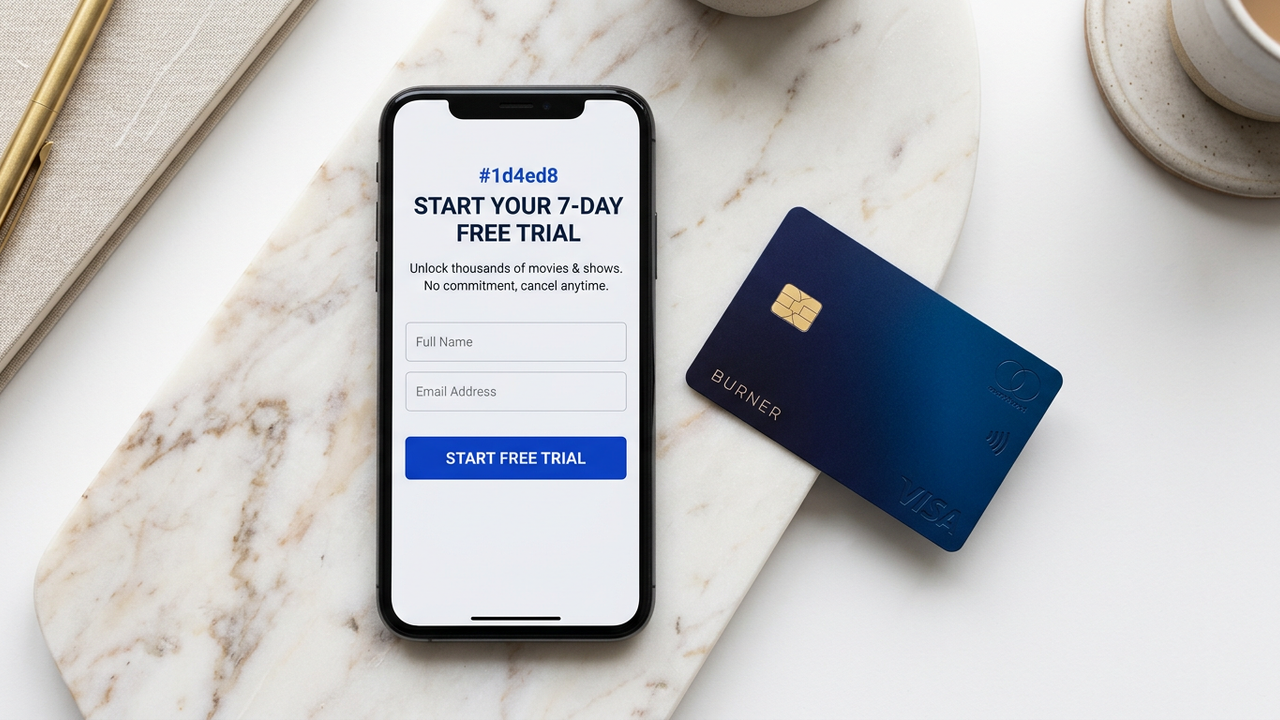
Most free trials convert automatically at the end of the period, and most cancellation flows are deliberately designed to take five minutes longer than they should. The cleanest pattern is to never give a card that can actually be charged in full.
With CryptoCardy, you can issue a card pre-loaded with the smallest amount the merchant accepts (often $1), complete the trial signup, and either delete the card before the renewal or leave it empty. Either way, the merchant's auto-charge fails cleanly — no overdraft, no fees, no follow-up emails to a real address (you don't have one).
The mechanics:
The platform minimum of $25 sounds high for a trial scenario, but the card is reusable — that $25 becomes your "trial wallet" for the next 6-10 trials, each one a fresh card created with a partial debit from the wallet.
Anything that asks for a card to "verify" before unlocking trial access fits the pattern.
A handful of providers refuse trials entirely if the card is prepaid (American media subscriptions in particular). Mitigation: pick a BIN with stronger "looks like a real card" signals — BIN 471938 Visa Business has the highest acceptance in this category, at the cost of being overkill for a trial.
Some trial flows ask for a card with billing-address verification (AVS). For these, fill in any plausible US address — the card is not AVS-checked at the issuer level, so the verification step at the merchant simply records whatever you enter without contradiction.
If a service tries to ban you for "trial abuse" by linking your card to previous accounts, the fresh-card-per-trial pattern defeats this completely. Each card has a unique number, BIN suffix, and history.
The charge declines as "card not found" or "transaction declined." Most services move the account to "payment failed — please update your payment method" status. If you don't respond, they cancel access within 3-14 days depending on the merchant. No debt accrues against you.
Yes, through the merchant's normal dispute process. CryptoCardy does not have a network-level chargeback portal — disputes go through the merchant first. If unresolved, contact support via the in-dashboard ticket system.
The charge succeeds. You can dispute it with the merchant, but the funds have already left your card balance. To avoid this, set a calendar reminder for two days before the trial ends.
Technically yes, but it defeats the burner pattern. A separate fresh card per trial keeps each trial isolated — no risk that one merchant's data leak affects another.
CryptoCardy doesn't provide phone numbers. For trials that require SMS verification, pair with a SMS-receive service (separate provider).
Some providers' terms prohibit prepaid cards or "burner" sign-ups. Read the terms of any service you sign up to. CryptoCardy does not have visibility into how you use the card.
Issue a card in 60 seconds. Use it for the trial. Delete it before renewal. No recurring charge can ever land.